
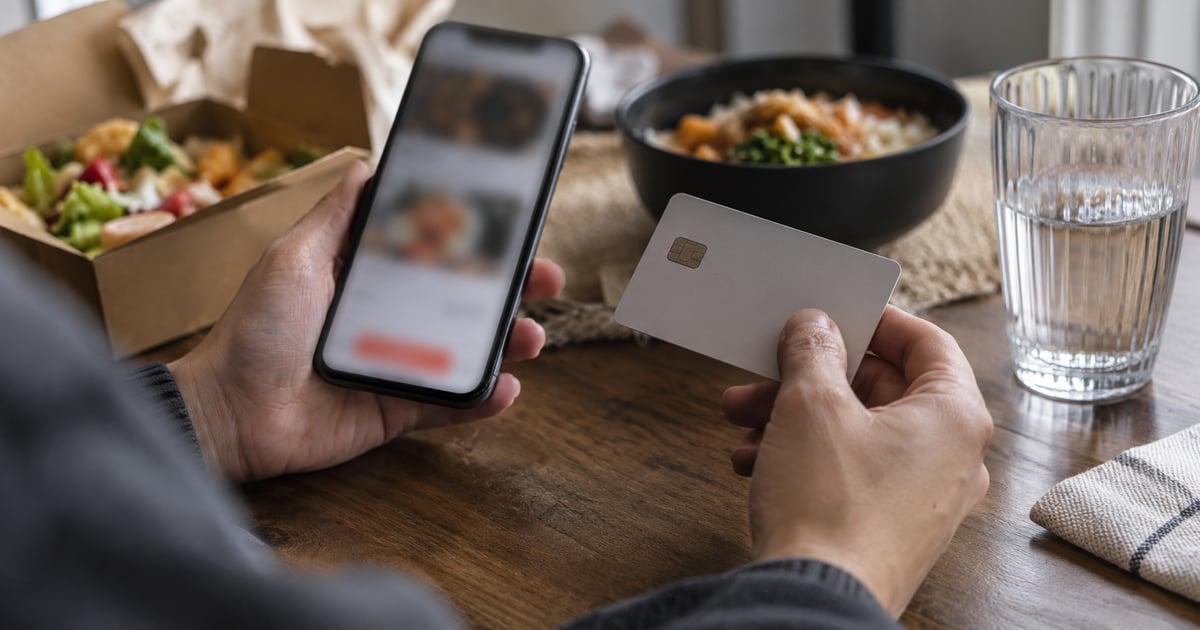

The customer picked a product, added it to the bag, and then gave up at the moment of checking out. The online menu checkout is exactly that last step, and for a delivery owner it is one of the most expensive losses: the ad or the Google search brought the person in, the menu convinced them, and the order was lost at the very end.
In this article you will learn what checkout is, what you can (and can't) control in it when you use a contracted online menu, and why asking for only a name and phone number on the first order tends to make the purchase faster.
Key takeaways
- Checkout is the final step of the purchase, and it is where the customer decides to finish or abandon.
- You don't build your own checkout: it comes ready-made in the online menu you subscribe to, and your job is to observe and configure it.
- On the first order, ask only for a name and a phone number (WhatsApp). Taxpayer ID, email, and date of birth come later, with a clear purpose.
- With no login, no redirect to another site, and automatic Pix (Brazil's instant payment system), the purchase flows better.
- A transparent delivery fee and delivery time, plus a clear order confirmation, reduce abandonment and anxious messages.
What is the online menu checkout?
Checkout is the final step of the purchase: the screen where the customer reviews the order, enters their details, chooses a payment method, and confirms. It comes after choosing items and customizing them on the menu's second page, the one that opens when the customer taps an item.
It rests on three principles:
- Speed: few fields and few taps.
- Clarity: the customer knows how much they will pay, how long delivery will take, and what happens next.
- Trust: no surprises in the price and nothing that looks strange at the moment of payment.
What do you control and not control in the checkout?
You don't create or program your own checkout: it comes ready-made in the online menu you subscribe to, and each platform has its own rules. That's why, instead of building, you observe and configure.
Before changing anything, ask your online menu provider:
- What does it require? Which fields are mandatory? Is there a login, a sign-up, or a redirect to another page?
- What does it let you control? Can you turn off mandatory fields, enable payment methods, and set the delivery fee and delivery time?
Open the menu on your phone, as a customer would, and place a test order all the way to the last screen. Write down every field that appears: that list is your diagnosis. To review the rest of the journey, see 7 adjustments to make ordering easier on the online menu.
The rule is simple: the less data, the better. Every extra field is one more reason for the customer to give up.
Which details should you ask for on the first order?
On the first order, ask only for a name and a phone number. The name identifies the order; the phone number (WhatsApp) is used to confirm, to give delivery updates, and to stay in touch afterward.
The CPF (Brazil's individual taxpayer ID number), email, and date of birth don't need to be mandatory on the first purchase. The customer doesn't know your restaurant yet, and asking for too much information too early creates distrust. They just want to eat. The phone number, on the other hand, is very valuable: it is a direct channel for reactivation and relationship building down the road.
When should you ask for the rest?
Later, as long as there is a clear purpose the customer understands. One example is a loyalty program: "enter your date of birth and get a perk."
This logic matches the necessity principle of Brazil's LGPD (General Data Protection Law): article 6, III, of the Lei Geral de Proteção de Dados (Law 13.709/2018) requires limiting the processing of personal data to the minimum necessary for its purpose. If you can't explain what a piece of data is for, you probably don't need to ask for it.
Why shouldn't the customer need to log in or leave the page?
Because mandatory login and external redirects stall the purchase. Creating a password to order a pizza is an unnecessary obstacle, and sending the customer to another site in the middle of the order breaks the flow and creates insecurity.
If your menu requires either of these, ask the platform's support whether an alternative setting exists. If it doesn't, take that into account when evaluating the tool.
Which payment method works best at checkout?
Automatic Pix, together with online card payment and payment on delivery. (Pix is Brazil's instant payment system; the same logic applies to any payment method that the customer can complete inside the checkout.) With it, the customer pays within the flow itself and the system recognizes the payment.
Avoid the Pix key that the customer has to copy, then type in the amount and send you a receipt. It is extra work for them, leaves room for errors in the amount, and forces you or your team to check receipts one by one.
How do you show the delivery fee and delivery time without losing the customer?
By clearly showing the total price and the delivery time before the confirmation. Many people abandon the cart when they see the delivery fee only at the end. Give a real delivery time, not the one you wish were true, and keep the delivery fee at or below the market average. Promising 30 minutes and delivering in 60 generates complaints and makes you lose the customer on their next order.
What should the customer see after finishing?
That the order went through, right away: a clear confirmation screen and an automatic WhatsApp message with the summary. This reduces messages like "has the order left yet?" and already activates the contact channel with the customer.
How do you use first-purchase coupons and loyalty programs?
Set the coupon value based on your average order value and prefer a fixed-amount discount in reais (R$) instead of a percentage: it's more precise for you, and the customer has less to calculate. For loyalty, if the system allows it, cashback is usually easier to measure than points, because it is a direct discount on the next order.
Which mistakes hurt the checkout the most?
The ones that hurt the most are asking for too much data, blocking the customer with a login or redirect, and hiding the cost until the end. Other common mistakes:
- Using a manual Pix key, with a receipt.
- Never testing your own menu as a customer.
- Changing something without tracking any metric afterward.
How do you know if the checkout is working?
By tracking metrics before and after each change. Three numbers help:
- Conversion of initiated checkouts, in Meta Ads, if you advertise. For this measurement to work, it's worth setting up the pixel on the online menu before advertising.
- Menu conversion, in your online menu's dashboard.
- Complaints about delivery or payment.
Change one thing at a time so you know what made a difference. And if the checkout is lean but the customer already arrives confused, review the order of the categories on the pizzeria menu, which comes before it.
What to do first
- Place a test order from your phone and cut every mandatory field that isn't name and phone number.
- Check for mandatory login and external redirects.
- Turn on automatic Pix and make sure the delivery fee and delivery time are realistic.
- Make sure the confirmation message on WhatsApp is in place.
The checkout is where the menu delivers the sale, and it's worth reviewing before investing in ads. If you want help looking at your whole delivery, from product to menu to traffic, Idea Digital Marketing can do that with you. More customers coming in. More customers coming back. Your delivery growing.
Frequently asked questions
Can you create your own checkout for your delivery?
No. The checkout comes ready-made in the online menu you subscribe to, and each platform has its own rules. You observe what it requires and configure what the tool lets you control.
Should the taxpayer ID, email, and date of birth never be requested?
They can be requested later, as long as there is a clear purpose the customer understands, such as a loyalty program. Brazil's LGPD has the necessity principle, which limits the processing of personal data to the minimum necessary for its purpose.
Why use automatic Pix instead of a copy-and-paste Pix key?
With automatic Pix, the customer pays inside the flow and the system recognizes the payment. With a key to copy, they type in the amount, may get it wrong, and still need to send a receipt for you or your team to check.
Does mandatory login hurt sales?
It does, because creating a password to order a pizza is an unnecessary obstacle. Ideally, the customer orders without creating an account, and it's worth asking the platform's support whether an alternative setting exists.
Should a first-purchase coupon be a percentage or a fixed amount in reais?
The recommendation is to prefer a fixed-amount discount in reais, because the value is more precise for you and the customer has less to calculate. The value itself depends on your average order value.
Want to know where your delivery business can grow?
Tell us a little about your operation. Idea analyzes your situation and talks with you about a realistic priority.
Analyze my delivery business